Survival.
Strategy. Structure.
The Framework That Rebuilt My Life
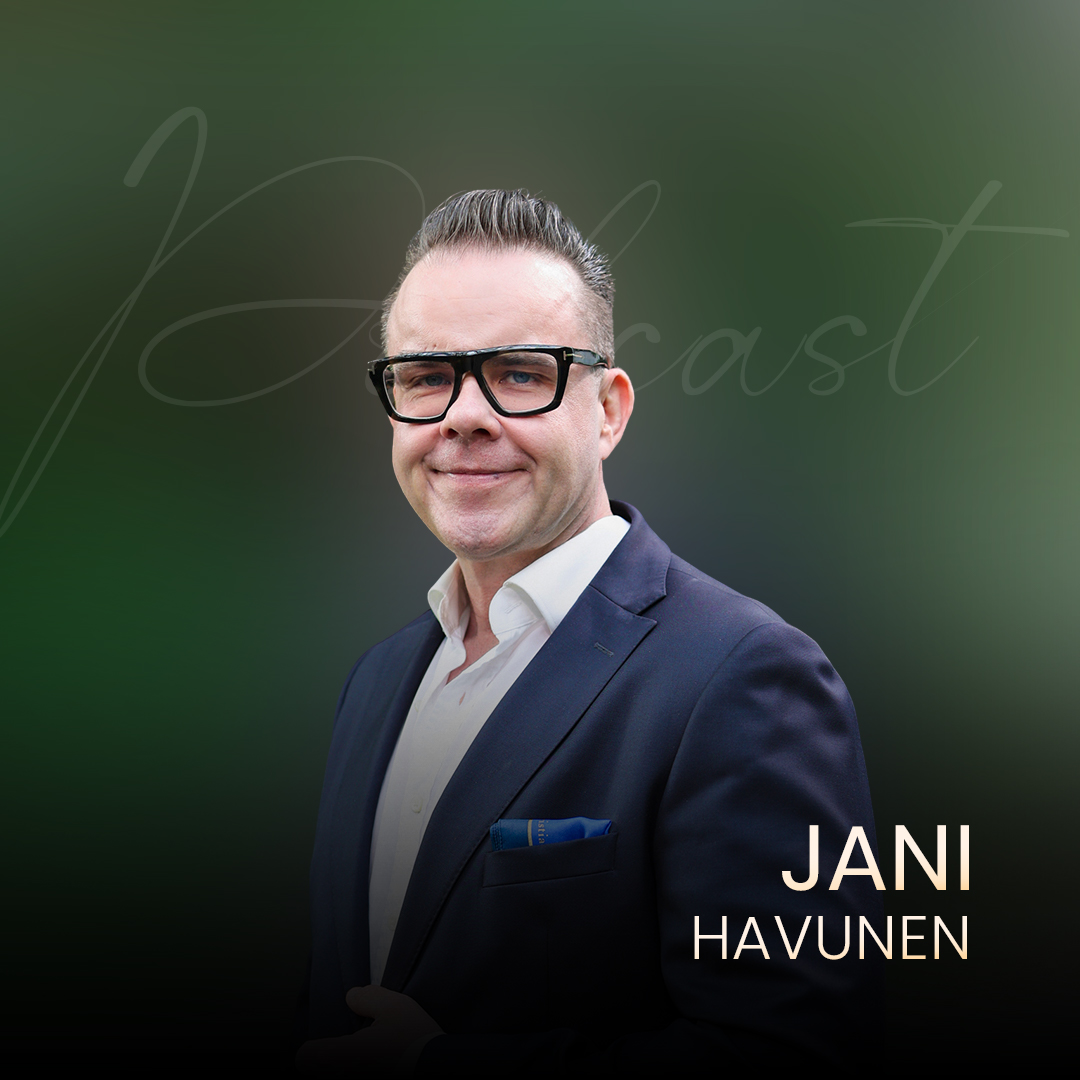
Hi, I'm Jani Havunen.
I'm an entrepreneur, author, speaker, coach, and advisor from Finland.
Today, I want to talk about something that has shaped both my personal
life and the way I think about leadership, responsibility, and human behaviour.
And that is the difference between surviving your life and actually
building one.
For many years, I was simply surviving.
My life involved addiction, crime, destructive behaviour, and eventually
prison.
I made decisions that hurt me and affected other people. And the
difficult part is that, looking back, many of those decisions followed patterns
I repeated again and again.
I wasn't always unaware that I was making mistakes.
Sometimes I knew perfectly well that what I was doing wasn't going to
lead anywhere good.
But knowing something and changing your behaviour are two very different
things.
And I think that is something many people can relate to.
You don't have to have experienced addiction or prison to understand
what it feels like to repeat a pattern that works against your own goals.
Maybe you keep postponing important decisions.
Maybe you react emotionally under pressure.
Maybe you work incredibly hard but never seem to move toward the life
you actually want.
Or maybe you're already successful, but some of your habits are
preventing you from reaching the next level.
Different circumstances. Different consequences.
But sometimes, surprisingly similar patterns.
During my time in prison, I started studying psychology.
I remember sitting in my cell in 2016, reading a high-school psychology
textbook and beginning to recognize patterns in my own thinking and behaviour.
For the first time, I started asking different questions.
Why did I react that way?
What was I actually trying to avoid?
Why did I keep repeating something when I already knew the consequences?
And perhaps the most important question was this:
If I can recognize the pattern, do I really have to follow it?
That realization didn't change my life overnight.
There was no magical moment when everything suddenly became easy.
But it gave me a different way to begin.
Over time, I came to understand my transformation through three
connected ideas.
Survival. Strategy. Structure.
Survival is where many of us begin.
We're reacting to circumstances, emotions, pressure, or habits that have
become familiar.
And sometimes those reactions may have helped us get through difficult
situations in the past.
But here's the problem.
What helped you survive yesterday may prevent you from building
something meaningful tomorrow.
You might avoid uncomfortable conversations because conflict once felt
dangerous.
You might try to control everything because uncertainty makes you
uncomfortable.
Or you might constantly chase the next achievement without ever asking
yourself why you're doing it.
These behaviours can look very different, but they may have something in
common.
You're reacting rather than deliberately choosing.
And that's where strategy comes in.
For me, strategy began with awareness, but awareness alone wasn't
enough.
I had to take responsibility for my decisions and start defining where I
actually wanted my life to go.
Not just what I wanted to escape.
But what I wanted to build.
Education became an important part of that process.
I continued studying, developed my understanding of law and business,
and eventually earned an LL.M. in International Corporate and Commercial Law
from King's College London.
I also built businesses, managed people, and learned what it means to
carry responsibility when decisions have real consequences.
But none of that happened simply because I became more motivated.
It required structure.
And structure is the third part of the framework.
It's about creating practical systems, routines, boundaries, and
standards that support the direction you've chosen.
Because motivation changes.
Your energy changes.
Your circumstances change.
And if your progress depends entirely on how you feel on a particular
morning, you're going to struggle with consistency.
Structure helps you continue even when motivation isn't there.
Of course, structure doesn't mean ignoring your health, your emotions,
or your need for rest.
It means learning to distinguish what you actually need from what you
simply feel like doing in the moment.
And making decisions accordingly.
Over the years, this way of thinking has developed further.
Today, I call my central decision-making concept Run the Filter.
The name and formal method came much later than those early experiences
in prison.
But the underlying question grew from what I learned about my own
behaviour.
The public framework has three simple parts.
Notice.
Filter.
Decide.
First, notice what's happening.
What is the actual situation?
What are you feeling?
And are you about to respond automatically?
Second, filter your options.
Ask yourself:
Will this move me toward where I want to go?
What might this decision cost me?
And what might happen if I choose differently?
Then, decide.
Make a deliberate choice instead of allowing the first emotional
reaction to make the decision for you.
Let me give you an example.
Imagine you're running a business.
A client contacts you and demands an immediate answer to an important
question.
You feel the pressure.
You don't want to disappoint the client.
And your first instinct is to make a quick decision.
But before you do that, ask one simple question.
When do you actually need my answer?
Maybe the deadline is immediate.
But maybe you have another two days.
And those two days could give you the opportunity to gather information,
speak to your team, and make a better decision.
The important thing isn't to delay everything.
It's to understand whether the urgency is real before allowing it to
control your response.
And the same principle applies outside business.
Think about a personal goal you've been working toward.
Maybe you're trying to improve your health, develop a new skill, or
build something important in your life.
Some days you feel motivated.
Other days you don't.
If you make every decision based only on your immediate feelings, you
may keep moving in circles.
But when you know what you're building toward, you have something
against which to evaluate those decisions.
That's why I believe the most important question isn't always,
"What do I want right now?"
Sometimes a much better question is, "What am I building
toward?"
And is this decision taking me there?
I don't believe there is a single formula that makes life easy.
I've made enough mistakes to know that.
And I still learn new things about myself and the world every day.
But I do believe we can become more deliberate in the way we live, work,
and lead.
That applies to someone rebuilding their life after serious
difficulties.
It applies to an ambitious professional who feels stuck despite their
abilities.
And it applies to an executive responsible for a company, a team, and
difficult decisions under pressure.
Our circumstances may be different.
But we can all benefit from recognizing our patterns, taking
responsibility, and building structures that support better choices.
My book, Shit Life to Self-Made, tells much more of my personal story
and the lessons that came from it.
But today, my work is about more than telling that story.
It's about turning experience into something useful for other people.
Because I don't believe your past should automatically determine your
future.
Your history matters.
Your experiences shape you.
But the choices you make, and the structures you build around those
choices, can change your direction.
And that brings me back to the three ideas I started with.
Survival.
Strategy.
Structure.
Survival may be where your story begins.
Strategy helps you understand where you want to go.
And structure helps you keep moving in that direction.
So here's the question I'd like to leave you with.
When you make your next important decision, will you simply react to
what's happening around you?
Or will you take a moment to run the filter?
Notice what's happening.
Consider what you're building toward.
And make a deliberate choice.
Because ultimately, it's not just about where you've been.
It's about what you're building toward.
Thank you for listening, and thank you to Worth Minds and The Worthy 100
for the opportunity to share my story.
 6 min