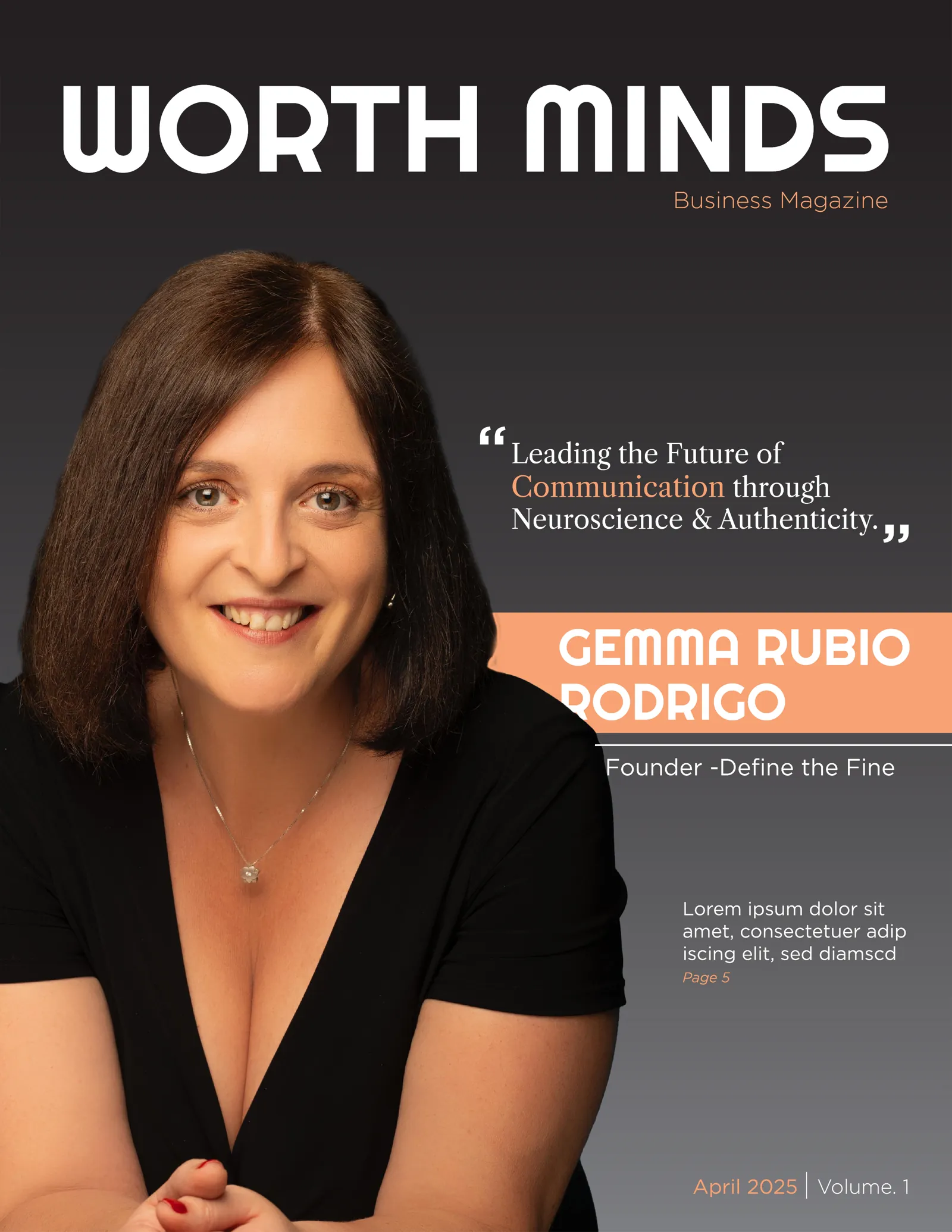
An Architect of A Better Future
“I want to continue mentoring future architects, codifying hard-won lessons into reusable patterns, and demonstrating that long-term trust and high-velocity delivery can coexist when the architecture is intentional.” Wayne Filin-Matthews is the Vice President, Data, AI, and Enterprise Architecture (Chief Enterprise Architect) at McDonald’s, having over 4 decades of experience in the Software and IT industry.
Early Beginnings
Wayne grew up in a home where curiosity was encouraged, and excuses were not. His early years were split between building things by hand and learning to explain ideas clearly, two skills that later became essential in architecture. He was the kid who took devices apart, not to break them, but to understand the hidden design decisions inside. That instinct carried into his education and first roles, where he learned that great systems are rarely “genius moments”; they are disciplined choices made over time.
Those formative experiences shaped his bias toward fundamentals: clean interfaces, strong principles, and teams that learn continuously. They also grounded him in humility.
Defining Moment
A pivotal moment came when a platform failure he helped investigate revealed a hard truth: their architecture wasn’t “wrong,” but it was brittle because it wasn’t built to change. He recalls, “We had optimized for short-term delivery, unintentionally burdening every future decision. That incident redefined my purpose. I stopped thinking of architecture as diagrams and began treating it as stewardship of reliability, developer experience, and customer trust.”
Since then, his direction has been clear: design for evolvability, make risk visible, and build feedback loops into both software and teams. The best architectures don’t just scale transactions; they scale learning, accountability, and the ability to respond responsibly when the world shifts.
Transformative Project
The most transformative work Wayne has championed has been the shift from project-centric delivery to a product-platform mindset, treating core capabilities as reusable services with clear ownership, standards, and automated governance. In practice, that meant establishing domain boundaries, shared reference architectures, and a paved road for security, observability, and deployment.
The impact was measurable, but more importantly, it was cultural: teams moved from negotiating every integration to confidently composing capabilities. He says, “Cycle time improved, incidents decreased, and onboarding sped up because the 'how' remained consistent. It also unlocked innovation once the basics were reliable; engineers could focus their energy on customer value rather than rebuilding infrastructure. For me, that’s the hallmark of good architecture: it makes the right thing the easy thing.”
Traversing Challenges
In high-stakes situations, he anchors a few principles: customer trust first, then clarity, then momentum. He starts by making the objective and constraints explicit: what must not fail (security, safety, compliance), what can be flexible, and what decision horizon we’re optimizing for.
He prefers decisions that reduce irreversible risk and keep options open, even if they feel less “perfect” in the moment. He also values dissent and evidence: he wants the uncomfortable data on the table early. Finally, he thinks about how the system will be run at 2 a.m., not just how it looks in a review. When trade-offs are unavoidable, he documents them, assigns owners, and embeds follow-through in the plan.
Evolving Industry
Over the next decade, he expects his industry to shift from “software as features” to “software as systems of responsibility.” AI will accelerate delivery, but it will also amplify the importance of governance, provenance, and transparency.
Architecture will become more event-driven, policy-aware, and cost-conscious, with security and privacy embedded by default rather than bolted on. He also anticipates stronger expectations for resilience and sustainability, including both energy use and organizational sustainability, meaning teams that can operate without burnout.
Greatest Influence
Wayne’s greatest influence has been a mentor early in his career who modeled “calm rigor.” He recalls, “He could walk into a chaotic outage, lower the room temperature, and ask the one question that mattered: 'What do we know, and how do we verify it?” From him, I learned that leadership is less about having answers and more about creating conditions where the truth can surface quickly. He also taught me to respect operators and frontline engineers, the people who live with architectural decisions long after the design review ends.”
An Enduring Vision
He measures true impact by what endures when no one is watching: trust, capability, and optionality. He questions, “Did we reduce friction between customers and employees? Did we make the system safer, more reliable, and easier to evolve? And did we grow people, leaving behind stronger engineers and better leaders than we started with?”
Beyond recognition, impact shows up in fewer late-night pages, clearer ownership, and decisions made closer to the work. To ensure his vision outlasts him, He focuses on institutionalizing principles rather than personality. He codifies standards into automation, documents architectural intent, and invests in mentorship so others can carry the work forward.
Proudest Moments
Wayne is most proud of the moments when architecture became an enabler rather than a gate, allowing teams to ship faster, more safely, and with greater confidence because the foundation was solid. That includes building platforms that improve reliability and security, as well as communities of practice where engineers could learn from one another and raise the bar together. He is the proudest when colleagues say, “That made my job easier,” because it means we respected their time and talent.
What he still aspires to achieve is broader: to help shape an industry standard for responsible, scalable systems, especially as AI becomes embedded everywhere.