Leadership·Blog
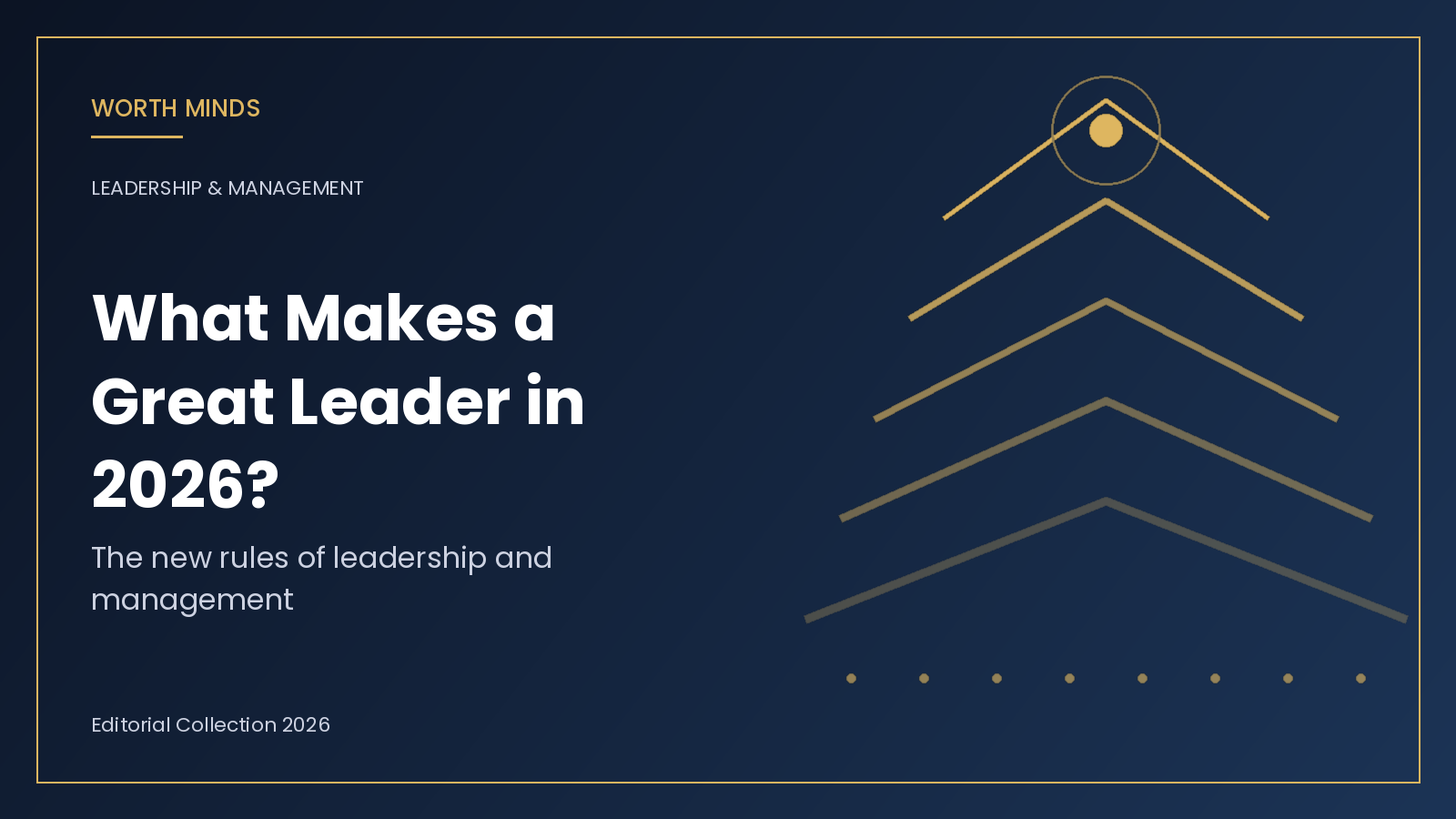
What Makes a Great Leader in 2026? The New Rules of Leadership and Management
eadership skills, qualities of a good leader, modern leadership, leadership in 2026, management skills
Author: Worth Minds
Date: November 10, 2026
Leadership is being tested by a business environment defined by rapid technological change, distributed teams, economic uncertainty and evolving employee expectations. The traditional image of a leader as the person who gives instructions and monitors performance is no longer sufficient for many organisations. Modern teams need direction, clarity and accountability, but they also expect leaders to listen, explain decisions and create conditions in which people can do meaningful work.
A great leader in 2026 is not defined by a title or a polished public image. Leadership is demonstrated through the quality of decisions, the trust a person builds and the ability to help others perform at their best. The role has become more complex, but its central responsibility remains: bring people together around a purpose and guide them towards results.
Clarity of Purpose and Direction
People work more effectively when they understand what the organisation is trying to achieve and how their responsibilities contribute to that outcome. A leader must translate broad ambition into clear priorities. This includes explaining what matters now, what can wait and how success will be evaluated.
Without clarity, teams may become busy without making meaningful progress. Departments can pursue conflicting objectives, employees may duplicate work and important decisions can be delayed. Clear direction does not require a leader to know every detail. It requires the ability to communicate the destination, establish boundaries and make priorities understandable.
Purpose should also be credible. Employees are unlikely to be inspired by statements that are disconnected from daily decisions. Leaders build confidence when they show how organisational values influence hiring, customer service, resource allocation and the way difficult situations are handled.

Emotional Intelligence and Trust
Leadership involves working with people who have different experiences, motivations and communication styles. Emotional intelligence helps a leader recognise these differences, manage personal reactions and respond thoughtfully under pressure.
Listening is a practical leadership skill. It helps managers understand problems before they become larger, identify concerns that may not appear in formal reports and make employees feel respected. Listening does not mean agreeing with every suggestion. It means considering information fairly before making a decision.
Trust is reinforced through consistency. Leaders should keep commitments, explain changes, acknowledge mistakes and apply standards fairly. When a difficult decision is necessary, a clear explanation is more respectful than silence or vague reassurance. Trust cannot be demanded through authority; it is earned through repeated behaviour.
Leading in a Technology-Enabled Workplace
AI, automation and digital collaboration are changing how work is organised. Leaders need enough technological understanding to ask informed questions, identify useful applications and recognise risks. They do not need to be experts in every system, but they should understand how technology affects roles, customers, data and decision-making.
A responsible leader avoids adopting tools simply because they are fashionable. They begin with a business need, involve the people who understand the workflow and establish safeguards for privacy, accuracy and accountability. Employees should receive training and clear guidance about how technology may be used.
Technology should support the organisation's purpose. It should not become a substitute for judgement, communication or human responsibility.
Trust cannot be demanded through authority; it is earned through repeated behaviour.
Adaptability Without Losing Direction
Change is unavoidable, but constantly changing priorities can exhaust a team. Strong leaders distinguish between adapting a strategy in response to new evidence and reacting to every new trend. They remain open to learning while preserving a clear sense of direction.
Adaptability involves asking what has changed, what the organisation has learned and whether its current approach remains appropriate. It also requires the courage to stop activities that no longer create value. Leaders should communicate why a change is happening and what it means for employees.
A stable purpose combined with flexible methods can help organisations navigate uncertainty. People need to know that the destination is meaningful even when the route must be adjusted.

Empowerment and Accountability
A leader who makes every decision creates a bottleneck. Organisations become more resilient when employees have the knowledge and authority to take responsibility within clearly defined boundaries. Empowerment involves setting expectations, providing resources and allowing people to solve problems.
Delegation is not the same as abandoning oversight. Leaders should agree on outcomes, decision rights and review points. They should provide support when needed and address performance issues fairly. Employees should be encouraged to raise problems early rather than hide mistakes out of fear.
The purpose of empowerment is to develop capability across the organisation. A leader's success should be reflected in the strength of the team, not in how many tasks require personal approval.
Communication During Uncertainty
When organisations face change, employees often need more communication, not less. Silence can create speculation, while overconfident promises can damage trust if circumstances change. Leaders should explain what is known, what remains uncertain and when further information will be available.
Good communication is two-way. Managers should create opportunities for questions and listen to feedback from people closest to customers and daily operations. They should also tailor messages to the audience: executives may need strategic implications, while employees may need practical guidance about responsibilities and timelines.
Honesty does not require sharing every confidential detail. It requires avoiding misleading statements and treating people with respect.
A leader's success should be reflected in the strength of the team, not in how many tasks require personal approval.
Developing Future Leaders
Strong organisations do not rely on one exceptional individual. They identify potential, provide mentoring, offer meaningful responsibility and create opportunities for employees to develop judgement. Succession planning and knowledge-sharing help protect the organisation when experienced leaders move on.
Developing future leaders also requires allowing people to learn from manageable mistakes. If every error is punished without discussion, employees may avoid initiative. If standards are absent, accountability disappears. Effective leaders balance support with clear expectations.
Mentoring is especially valuable when it helps people understand not only what to do but why decisions are made. This develops independent judgement rather than simple imitation.
Conclusion: Leadership Is Measured Through Others
The demands of leadership will continue to evolve as technology, markets and expectations change. Yet the qualities that create lasting confidence remain recognisable: integrity, clarity, sound judgement, empathy, courage and accountability.
A great leader in 2026 uses technology thoughtfully, adapts without losing purpose and creates an environment where people can contribute and grow. Their achievement is not measured only by personal recognition or short-term performance. It is also measured by the strength of the organisation they build and the people who become more capable because of their leadership.

Worth Minds · The Orbit Edition
30 Stories Beyond Earth
Put your name forward for consideration and become part of a collection of stories designed to inspire generations.
Submit NominationCurrent Issue
Worth Minds · The Orbit Edition
30 Stories Beyond Earth
Put your name forward for consideration and become part of a collection of stories designed to inspire generations.
Submit NominationWorth Minds · The Orbit Edition
30 Stories Beyond Earth
Put your name forward for consideration and become part of a collection of stories designed to inspire generations.
Submit NominationCopyright © 2026 Worth Minds -
All Rights Reserved
All Rights Reserved