Author: Eve Richards
Date: September 26, 2026
How Independent Filmmakers Are Turning Short Films Into Global Entertainment Properties
Independent film is no longer just about making a movie.
Today, it is increasingly about building intellectual property, understanding audience psychology, and creating stories capable of resonating far beyond a single screen or festival premiere.
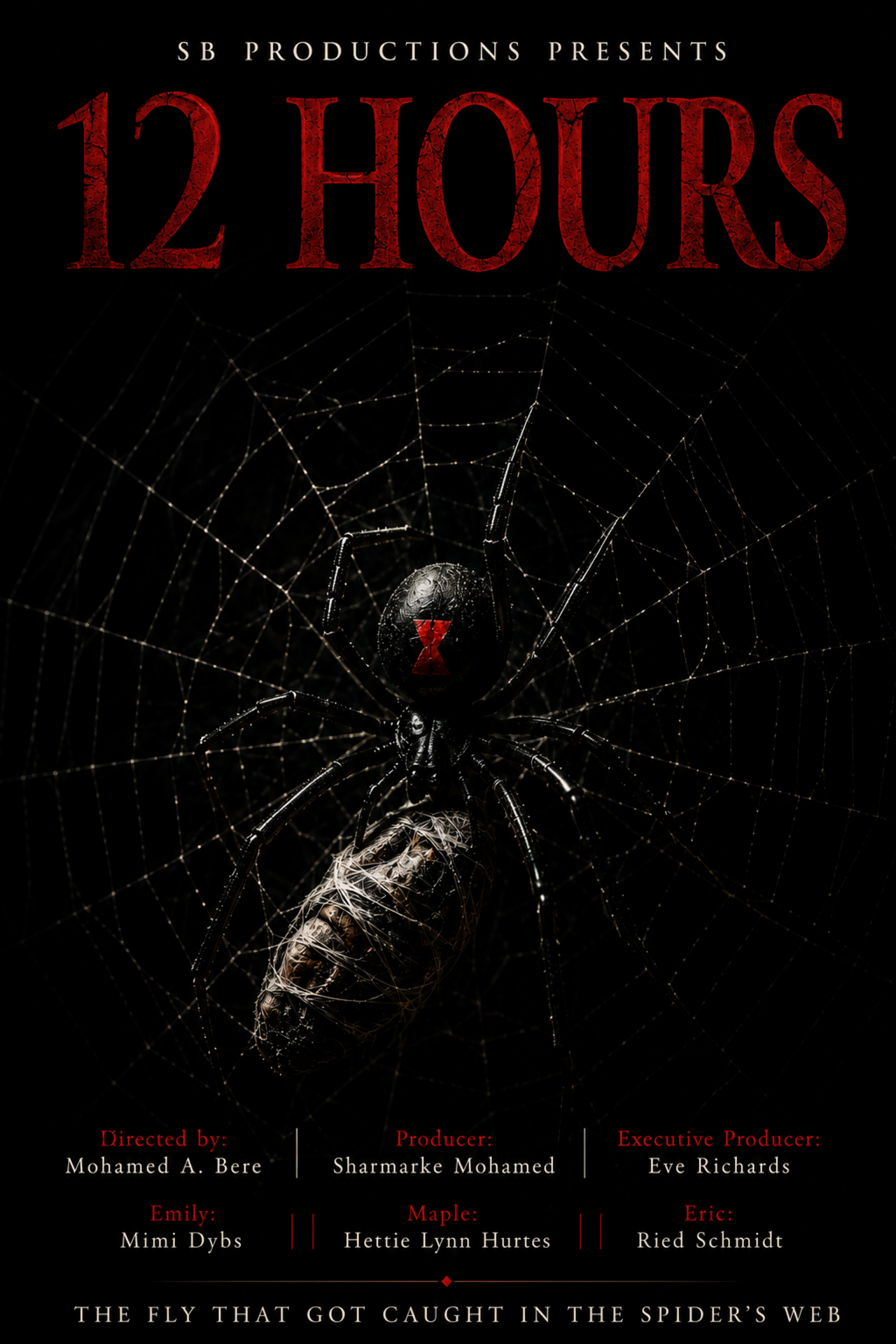
That shift is part of what makes the psychological horror short film 12 HOURS particularly interesting.
Directed, written, and produced by Mohamed A. Bere, produced by Sharmarke Mohamed and SB Productions, and executive produced by Eve Richards, the film is being developed not simply as a standalone short, but as a proof-of-concept project with the potential to evolve into a feature film or television series if the concept gains traction with audiences and through the festival circuit.
From Short Film to Intellectual Property
The traditional role of a short film has often been straightforward: tell a compelling story within a limited runtime and create an opportunity for filmmakers to demonstrate their creative abilities.
That model is changing.
For many independent filmmakers, a short film can now serve as something much larger: a proof of concept, audience-testing vehicle, festival asset, and potential foundation for a larger entertainment property.
The question is no longer simply whether a film can be completed.
It is whether the world, characters, concept, and emotional experience are strong enough to continue beyond the original production.
Why 12 HOURS Stands Out
At a time when horror continues to attract audiences across streaming platforms and theatrical entertainment, psychological horror offers filmmakers an opportunity to create tension without relying entirely on spectacle.
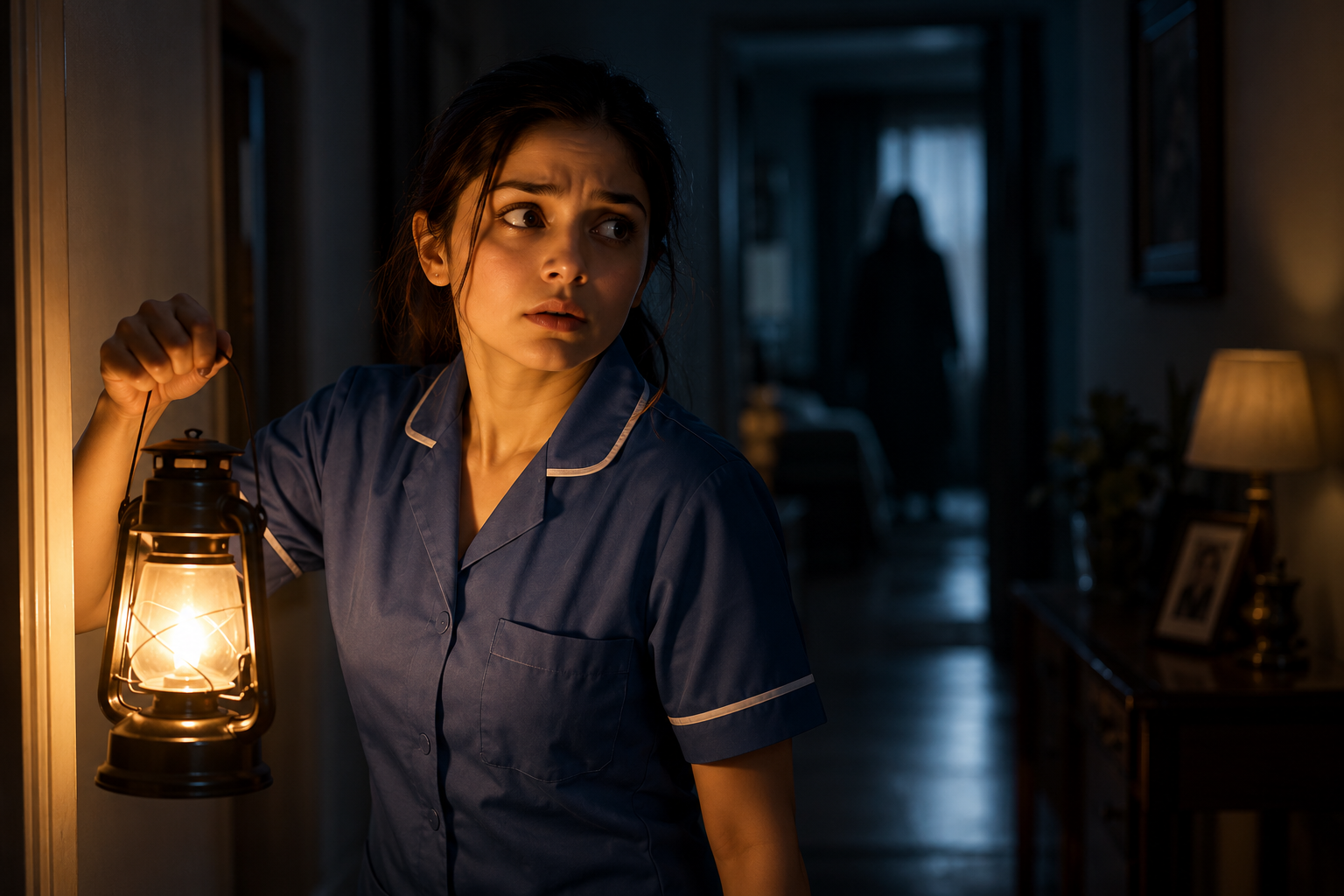
12 HOURS follows a young caregiver named Emily, whose attempt to keep her life together takes an increasingly disturbing turn during what initially appears to be an ordinary caregiving assignment.
As the situation develops, the story moves deeper into themes of vulnerability, fear, survival and the unknown.
Rather than explaining everything directly, the film relies on atmosphere and psychological tension, allowing the audience to interpret what is happening and become part of the experience.
The Power of Psychological Restraint
The creative direction of 12 HOURS is built around restraint.
Instead of depending primarily on shock value, the film emphasises atmosphere, tension, symbolism and emotional unease.
This approach reflects a broader evolution within psychological horror, where the strongest moments are not always the loudest ones.
Sometimes, what the audience does not see can be as important as what appears on screen.
By leaving room for interpretation, psychological storytelling can encourage viewers to actively participate in the experience, forming their own understanding of the characters, environment and events unfolding around them.
When Marketing Becomes Part of the Story
The philosophy behind 12 HOURS extends beyond the film itself and into its visual rollout and marketing strategy.
Rather than overwhelming audiences with excessive behind-the-scenes material or revealing too much too early, the team has focused on a controlled and staggered promotional approach.
That strategy allows curiosity to develop naturally.
In an environment where audiences are exposed to an enormous amount of content every day, revealing every detail before the audience experiences the story can reduce the sense of discovery.
For independent filmmakers, timing, curiosity and controlled storytelling can therefore become important parts of audience engagement.
The Short Film as a Strategic Asset
For independent filmmakers, this shift has important implications.
A short film can function as more than an isolated creative project. It can become a proof-of-concept asset capable of generating festival attention, media interest, potential collaborations, streaming conversations and opportunities for future development.
When a concept demonstrates enough audience potential, the possibility of expanding it into a larger format becomes more tangible.
That expansion could take the form of a feature film, television series, franchise, or broader storytelling universe.
The short film, in this sense, becomes the beginning of a larger conversation.
Thinking Beyond the Screen
The principles behind this approach extend beyond entertainment.
Across industries, creators, entrepreneurs and brands are increasingly being challenged to think beyond single products or isolated moments.
The focus is shifting toward scalability, audience engagement, strategic positioning and long-term intellectual property value.
For independent filmmakers, this means understanding that a compelling story can potentially become more than a single piece of content.
It can become an asset that creates opportunities across festivals, media, partnerships, platforms and future productions.
Mohamed A. Bere: A Global Storytelling Perspective
Director, writer and producer Mohamed A. Bere represents a generation of filmmakers approaching storytelling from a global perspective.
Influenced by Hollywood storytelling, Bollywood’s emotional depth and the visual language of anime, Bere brings together different creative influences while focusing on emotional atmosphere and psychological immersion.
That combination allows the project to approach horror through a lens that is not limited to a single filmmaking tradition.
For independent filmmakers working in an increasingly global entertainment environment, this ability to draw from multiple storytelling cultures can become an important creative advantage.
The Producer's Role Is Expanding
Producer Sharmarke Mohamed, founder of SB Productions, brings an entrepreneurial perspective to the project.
As independent filmmaking increasingly intersects with branding, audience development and platform strategy, the producer's role extends beyond coordinating production.
Modern producers must also consider how a project can be positioned, developed and connected with audiences across different platforms and markets.
That broader understanding can become particularly important when a short film is being developed with the possibility of future expansion.
Eve Richards: Connecting Storytelling and Media
Executive Producer Eve Richards joins the project following her work in Sony Pictures’ A Line of Fire and the upcoming film Straight Shot alongside Dolph Lundgren, Tyrese Gibson and Rachael Leigh Cook.
Richards, who also hosts The Discovery Pod with Eve, brings experience across storytelling, media and audience-facing communication.
Her involvement adds another dimension to the project’s broader approach, where filmmaking increasingly intersects with media strategy, positioning and international audience engagement.
The Business of Modern Storytelling
The evolution of projects like 12 HOURS reflects a wider change taking place within independent entertainment.
The future of film is no longer shaped exclusively by traditional studio systems.
Independent creators increasingly have the ability to develop an idea, build an audience, create festival momentum, attract collaborators and explore opportunities across multiple platforms.
This does not eliminate the importance of traditional filmmaking fundamentals.
Story, character, atmosphere and execution remain at the centre.
But around those fundamentals, a new layer of strategy, positioning and intellectual property thinking is emerging.
What Comes Next for 12 HOURS?
Whether 12 HOURS ultimately expands into a feature film or television series remains to be seen.
What is clear is that the project is being approached with a broader vision in mind.
Its foundation is rooted in psychological horror, but its ambitions extend into the evolving business of modern storytelling, audience development and entertainment IP.
For independent filmmakers, that shift represents an important opportunity: a short film does not necessarily have to be the final destination.
Sometimes, it can be the first proof that a much larger story deserves to be told.
Current Issue
All Rights Reserved